
05 Dec Marine And Coastal Corrosion: Why PVC Pipes Last Longer
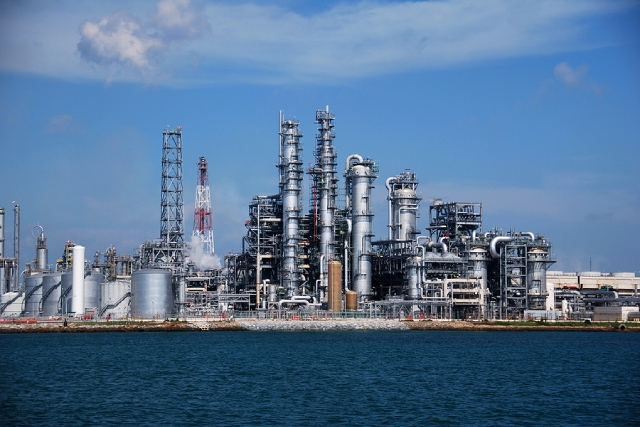
Salt hangs in the air around Tuas and Jurong Island. It settles on equipment, creeps into joints, and quietly eats away at metal surfaces day after day. For industrial sites near the coast, corrosion is not a future risk. It is a daily reality that drives up maintenance costs, causes unexpected downtime, and shortens the lifespan of critical piping systems.
Many plant operators in these areas have seen metal pipes rust far earlier than expected, even when protective coatings are applied. Exposure to salt spray, high humidity, and fluctuating temperatures creates a perfect environment for corrosion to accelerate. That is why more facilities are rethinking their material choices and turning to PVC piping as a long-term, practical alternative.
Understanding corrosion in marine and coastal zones
Marine and coastal corrosion happens when metal reacts with moisture, oxygen, and salt. Chloride ions from seawater are especially aggressive. They penetrate protective layers on steel and even stainless steel, triggering pitting and crevice corrosion that is difficult to detect until damage is severe.
In industrial zones like Tuas and Jurong Island, pipes are often exposed not only to sea air but also to chemical vapours, heat, and constant operation. This combination speeds up degradation. Even galvanised or coated metal pipes need frequent inspections, repairs, and eventual replacement.
PVC, by contrast, does not rust, pit, or oxidise. Salt has no chemical effect on it. This inherent resistance is one of the biggest reasons PVC performs so well in coastal environments where metals struggle to survive.
Why metal pipes struggle near the sea
Metal piping systems rely heavily on protective measures. Paints, linings, and cathodic protection can slow corrosion, but they rarely eliminate it. Once a coating is scratched or wears thin, corrosion begins underneath, often unseen.
Maintenance teams then face recurring tasks such as sandblasting, recoating, or replacing sections of pipe. Over time, these costs add up. There is also the risk of leaks that may disrupt operations or cause environmental and safety concerns.
In contrast, PVC pipes maintain their structural integrity without surface treatments. There is no hidden corrosion working beneath the surface, which gives plant operators greater confidence in long-term performance.
How PVC resists saltwater damage
PVC is a non-metallic material, so it does not participate in electrochemical reactions that cause corrosion. Saltwater, humidity, and marine air simply do not affect it in the same way they affect steel or iron.
This makes PVC particularly suitable for exposed installations, underground runs, and areas close to shorelines. For facilities managing water intake, discharge lines, or chemical transport, PVC offers predictable performance even after years of exposure.
Many engineers selecting a PVC pipe in Singapore for coastal projects do so because it delivers consistent results without the uncertainty that comes with metal corrosion.
Lower maintenance, lower lifetime costs
Initial material cost is only one part of the equation. The real expense of piping systems often lies in maintenance, repairs, and downtime. Metal pipes in coastal areas require ongoing attention to keep corrosion under control.
PVC systems reduce these demands significantly. There is no need for repainting or corrosion monitoring. Joints remain reliable, and internal surfaces stay smooth, which also helps maintain steady flow rates over time.
When viewed across the full lifecycle of an installation, PVC often proves more cost-effective than metal, even in demanding industrial settings.
Smooth flow and operational efficiency
Corrosion not only weakens metal pipes. It also roughens internal surfaces, increasing friction and reducing flow efficiency. Pumps have to work harder, energy consumption rises, and systems become less predictable.
PVC pipes have smooth internal walls that stay smooth throughout their service life. There is no scaling or rust buildup to restrict flow. This consistency supports stable system performance and can contribute to energy savings, especially in large-scale operations.
For many facilities, this reliability is another reason engineers often recommend using PVC in industrial plants when operating near marine environments.
Installation advantages in industrial settings
PVC pipes are lighter than metal alternatives. This makes handling, transport, and installation easier, particularly in large or complex industrial sites. Lighter materials can reduce labour time and lower the need for heavy lifting equipment.
Jointing methods such as solvent cementing or rubber ring systems are straightforward and well-suited to industrial schedules. With proper installation, these joints form strong, leak-resistant connections that perform reliably over time. Faster installation also means shorter project timelines and less disruption to ongoing operations, which is a major advantage in busy industrial zones.
Chemical resistance beyond saltwater
Marine environments are rarely the only challenge. Many coastal industrial plants handle chemicals, wastewater, or process fluids that can further attack metal pipes. PVC offers broad chemical resistance, making it suitable for a wide range of industrial applications. Whether dealing with saline water, mild acids, or certain industrial effluents, PVC maintains its performance without special linings. This versatility allows facilities to standardise piping materials across different systems, simplifying maintenance and inventory management.
A practical choice for Singapore’s coastline
Singapore’s industrial coastline is compact but intense. Space is limited, systems run continuously, and downtime is costly. Choosing materials that can withstand the environment with minimal intervention is essential.
PVC piping aligns well with these demands. Its resistance to corrosion, ease of installation, and long service life make it a practical solution for marine and coastal applications across the island.
From new developments to retrofitting ageing systems, PVC continues to gain ground as industries look for durable, predictable piping solutions.
Conclusion
Marine and coastal corrosion is not a problem that can be ignored, especially in areas like Tuas and Jurong Island. While metal pipes may seem familiar, their vulnerability to saltwater often leads to higher costs and ongoing challenges.
PVC pipes offer a proven alternative that stands up to harsh coastal conditions with far less maintenance and greater reliability. For industrial operators planning ahead, material choice can make a lasting difference.
If you are exploring dependable piping solutions, Vicplas offers a comprehensive range of over 400 designs of pipe and pipe fittings to support industrial needs across marine and coastal environments. Our extensive selection makes it easier to build systems that last, even in Singapore’s toughest conditions.