
08 May Sustainable Grow Systems For The Singapore 30 By 30 Goal
Singapore has never shied away from a big challenge. A city-state with limited land, a tropical climate, and almost no agricultural heritage to speak of, it has consistently found creative ways to punch well above its weight. Food security is the latest frontier, and the stakes could not be higher.
Today, Singapore imports more than 90 per cent of its food, making it highly vulnerable to global and regional disruptions in food supply and demand. That is exactly why the Singapore Food Agency (SFA) introduced the “30 by 30” goal – an ambition for locally produced food to meet 30% of Singapore’s nutritional needs by 2030, reducing the country’s reliance on imports and its vulnerability to supply interruptions. Reaching that goal requires rethinking how, where, and with what we grow food in this city, and that is where sustainable grow systems come in.
Why grow systems matter so much
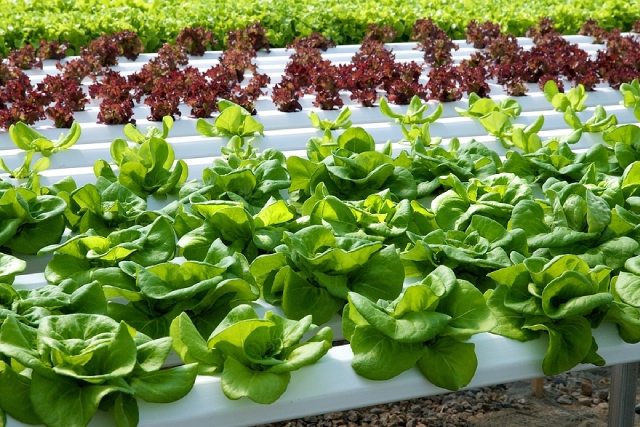
When most people picture farming, they imagine vast open fields, the kind of landscape Singapore simply does not have. Urban grow systems flip that picture entirely. Whether stacked in vertical towers, suspended in nutrient-rich water, or nestled on a rooftop, these systems are engineered to produce meaningful yields from compact, unconventional spaces.
There are six main types of systems commonly used in modern urban agriculture, and each brings its own strengths depending on what a farm needs to grow, the space available, and the level of investment involved. Choosing the right one and building it well is where the real work begins.
One often-overlooked factor in that build process is the infrastructure that holds everything together: the pipework, channels, and fittings through which water, nutrients, and sometimes even fish waste must flow reliably, day in and day out. The quality of PVC pipe fittings in Singapore farms, for example, has a direct bearing on how efficiently a system performs. Poorly fitted pipes leak, clog, and fail, and in a recirculating hydroponic or aquaponic setup, even a small failure can wipe out an entire crop. Getting the basics right is the backbone of the whole operation.
What makes a grow system sustainable?
Sustainability in urban farming is about more than just skipping pesticides. It is about using every resource (land, water, energy, and human effort) as efficiently as possible, while building systems that can keep performing reliably over time.
Hydroponics and aquaponics systems allow farms to grow vegetables and fish even in limited urban spaces, using up to 90% less water, accelerating plant growth, and virtually eliminating the risk of soil contamination. That kind of resource efficiency makes farming viable in an urban setting where water, energy, and space all come at a premium.
Sustainable grow systems also tend to be more resilient. Because they are often indoors or in controlled environments, growers can control water, temperature, and soil conditions and avoid pests and disease, which are factors that can devastate open-field crops, particularly in Singapore’s heat and humidity.
The role of reliable infrastructure
A grow system is only as good as its construction. Nutrient delivery, water recirculation, and drainage all depend on pipes, fittings, and channels that can handle the constant demands of an active farm. In a tropical climate like Singapore’s, this matters even more. Heat, humidity, and continuous water flow put pressure on materials that lesser-quality components simply cannot withstand over time.
This is why the choice of materials and the expertise behind them is so important to Singapore’s urban farming push. Farms backed by robust, well-engineered components can run consistently at full capacity. Those cutting corners on infrastructure often find themselves dealing with leaks, inefficiencies, and costly downtime instead of growing food.
Reliable piping infrastructure also makes it easier to scale up. As Singapore’s agri-food industry grows, many farms will need to expand their systems to increase output. A solid foundation means that expansion is straightforward, rather than requiring a complete rebuild.
Growing up, not out
From rooftop farms to repurposed warehouses, urban farming in Singapore is happening everywhere: on the ground, inside buildings, on walls, on rooftops and more. Each of these environments comes with its own set of engineering requirements, but the common thread is the need for systems that are purpose-built, durable, and efficient.
Aquaponics is another exciting avenue. Aquaponics combines aquaculture, which is the growing of fish and other aquatic life, with hydroponics, which is growing plants without soil. This green, pesticide-free method outperforms traditional farming by producing more yield with less water, space, and effort. Fish waste is converted to nitrates, which the vegetables use as fertilisers, while the plants filter and clean the water for the fish. It is a genuinely elegant loop, and one that has particular appeal in Singapore, where both protein and vegetable production are priorities under the 30 by 30 framework.
Progress so far, and the road ahead
Although technology has driven productivity gains in recent years, Singapore still produces less than 10 per cent of its own food. That said, some categories are gaining ground: locally farmed hen eggs and bean sprouts now meet 30 and 50 per cent of domestic demand, respectively. That is real, meaningful progress, and it shows what is possible when the right systems, support, and infrastructure are in place.
The government has developed an 18-hectare Agri-Food Innovation Park at the Greater Sungei Kadut area to encourage innovation in the agri-food industry and attract agri-tech companies to Singapore, where high-tech urban agriculture and aquaculture are co-located with research and development activities. Investments like these signal that the 30 by 30 goal remains a driving force behind Singapore’s food future.
The challenge ahead is significant, but the ingredients are there: ambition, technology, a supportive policy environment, and a growing ecosystem of farmers, researchers, and infrastructure specialists working together.
Conclusion
Sustainable grow systems are not just a trend. They are a practical, necessary response to Singapore’s food security challenge. Every farm that goes up, every system that runs cleanly, every kilogram of locally grown produce that reaches a dinner table here is a step forward.
But none of it works without the right foundations. If you are building or upgrading a grow system and want infrastructure you can count on, Vicplas is a name worth knowing. With a comprehensive range of over 400 designs of pipe and pipe fittings, Vicplas has the depth and expertise to support urban farming projects of any scale, from a small rooftop setup to a large commercial operation. Get in touch with Vicplas to find out how our solutions can help your grow system perform at its best.